Journal · Process
What Is Intuitive Painting?
Intuitive painting is the practice of starting a work without a planned subject, letting movement, color and emotion surface a figure from within. Israeli artist Zvi Aharon shares his process.
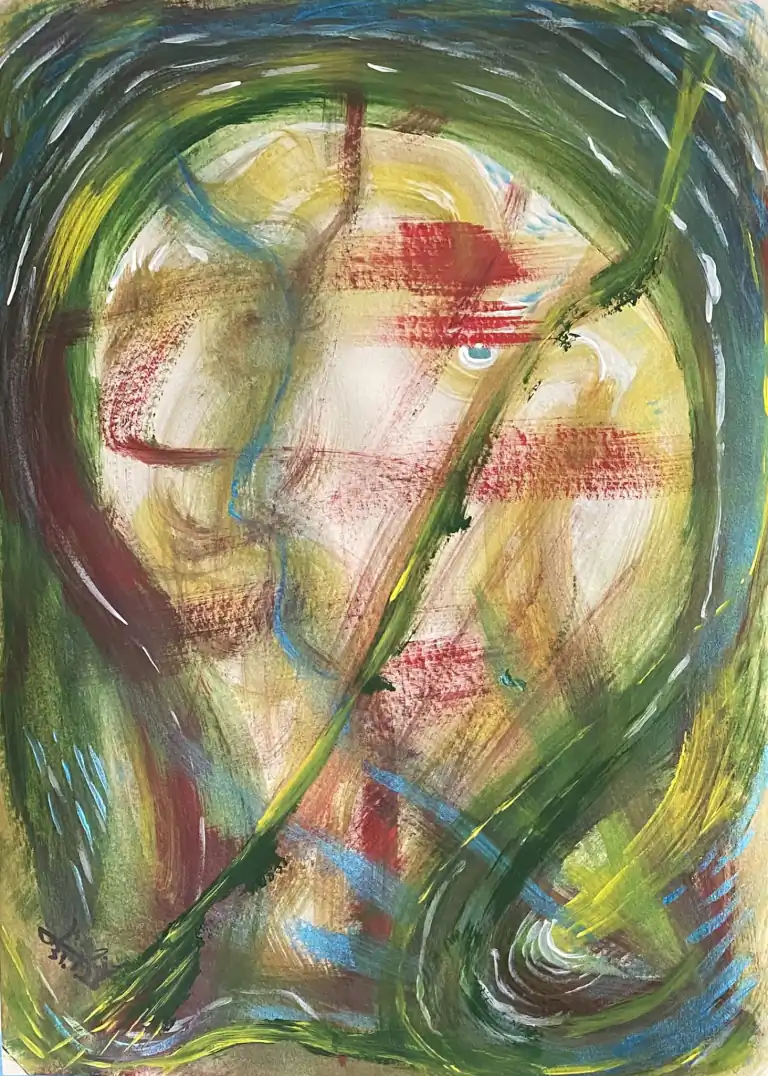
Intuitive painting is a way of making art that begins without a predetermined subject. Instead of sketching a known image and then filling it in, the painter allows movement, color and feeling to lead. The figure — if one appears at all — is discovered during the act of painting, emerging from the marks rather than being imposed on them.
How an intuitive painting begins
For Zvi Aharon, a painting usually starts from an internal state rather than a visual reference. A color may feel right; a gesture across the paper may release something. The first layers are not meant to survive — they exist to break the white of the surface and to give the work somewhere to push back against. Only once the surface holds enough energy does the search for form begin.
Finding the figure within the abstraction
Intuitive painting does not reject figuration — it loosens it. As marks accumulate, a shoulder, a gaze or the line of a spine may declare itself. The painter's discipline is to notice this emergence without forcing it, following the image that the painting itself wants to become. The result sits between figuration and abstraction, between the named and the felt.
The role of emotion and memory
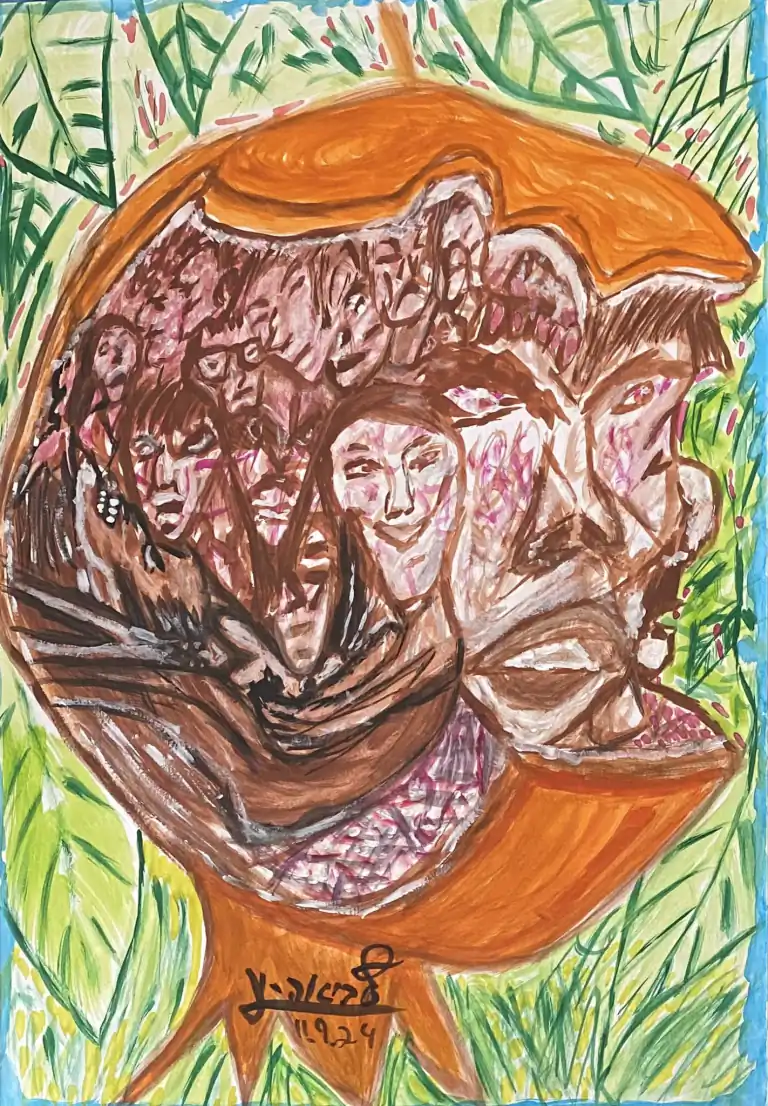
Emotion is the engine of the process, but the work is not illustration. Loss, tension, recovery and desire live in the weight of a color or the speed of a line. Memory supplies imagery without being copied from it. The painter trusts that an honest internal state will produce a more truthful image than a planned one could.
A simple way to try intuitive painting
- Choose a surface and a medium you can move quickly with — paper and ink, acrylic, or soft pastel.
- Set a color or a feeling as your only starting point. No reference image, no sketch.
- Make marks for movement and energy, not for a shape you can already name.
- Pause often. Ask what the surface is suggesting rather than what you intended.
- Follow the emerging image where it leads, letting abstraction remain where figuration is not asked for.
Why the finished work feels alive
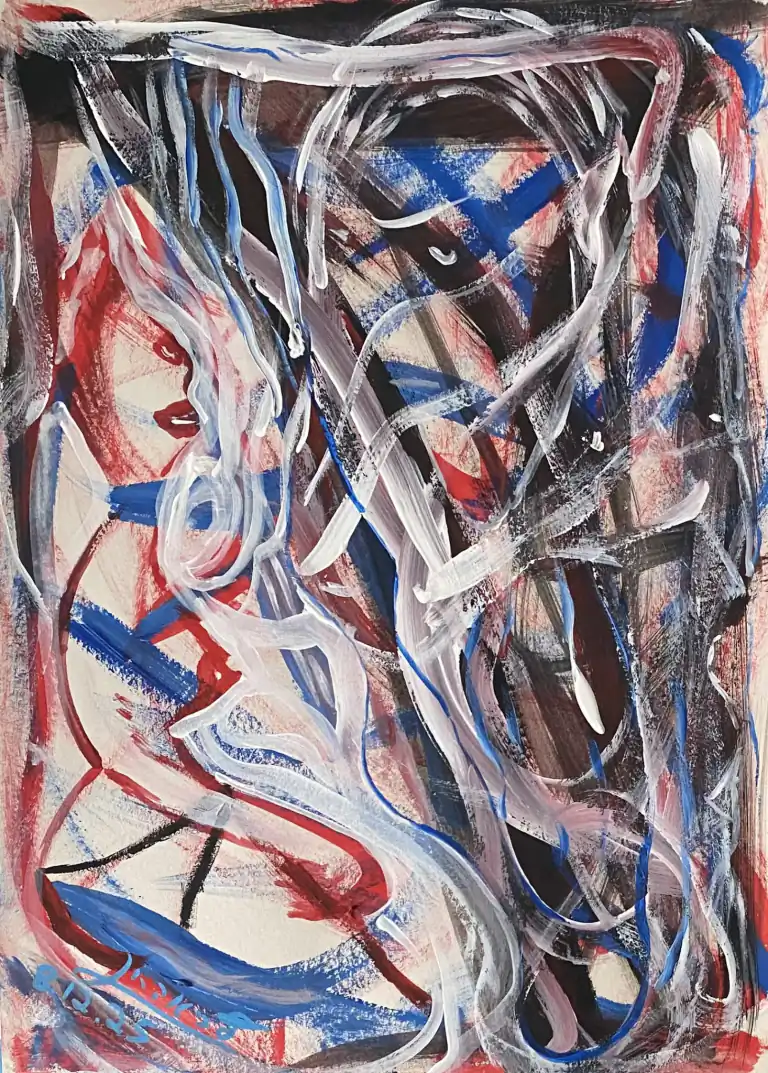
Because an intuitive painting is built from honest response rather than premeditation, it keeps something of the struggle that made it. The viewer can sense the search — the moments of conviction and the moments of doubt — and that tension is what makes the work feel alive rather than merely decorative.